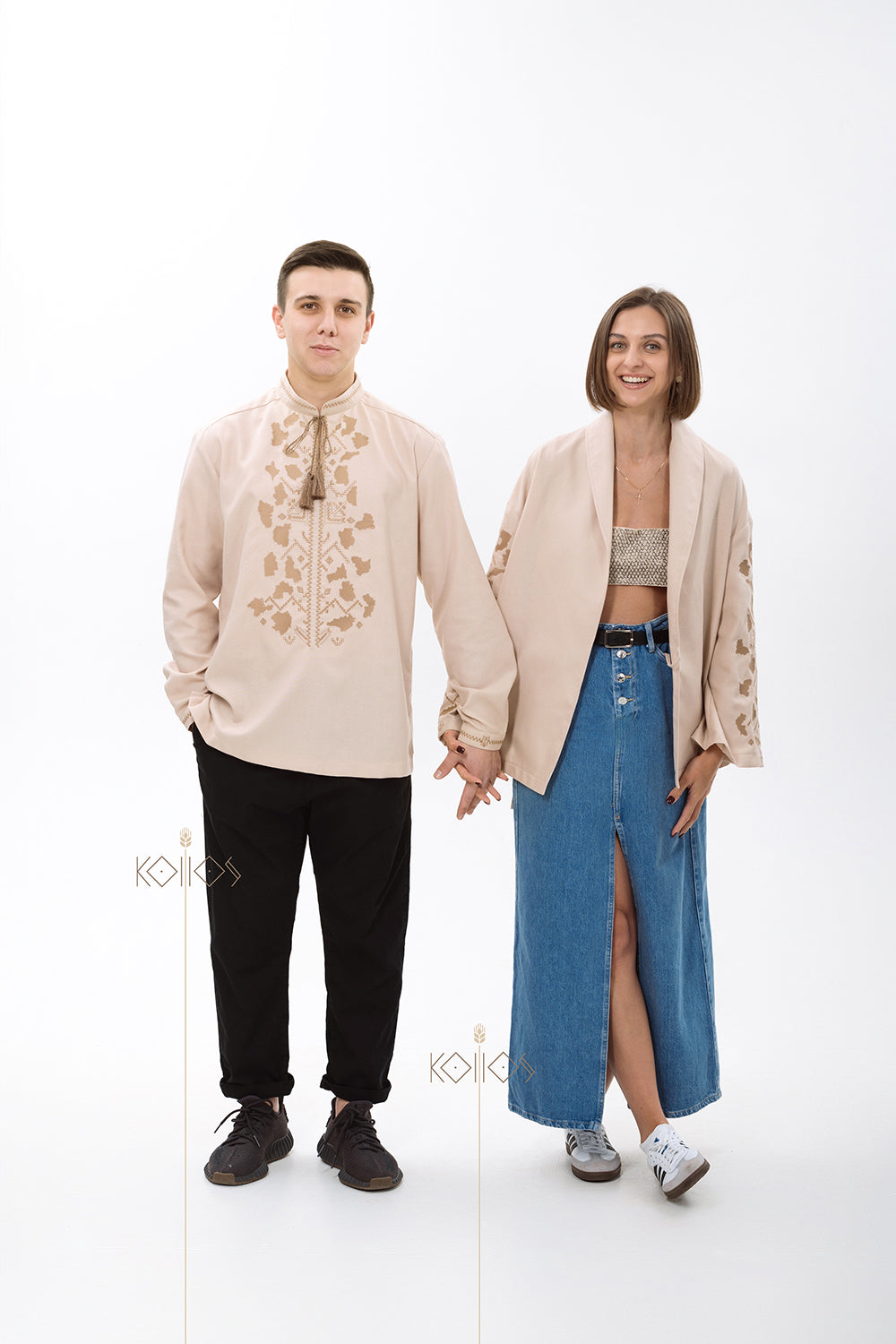
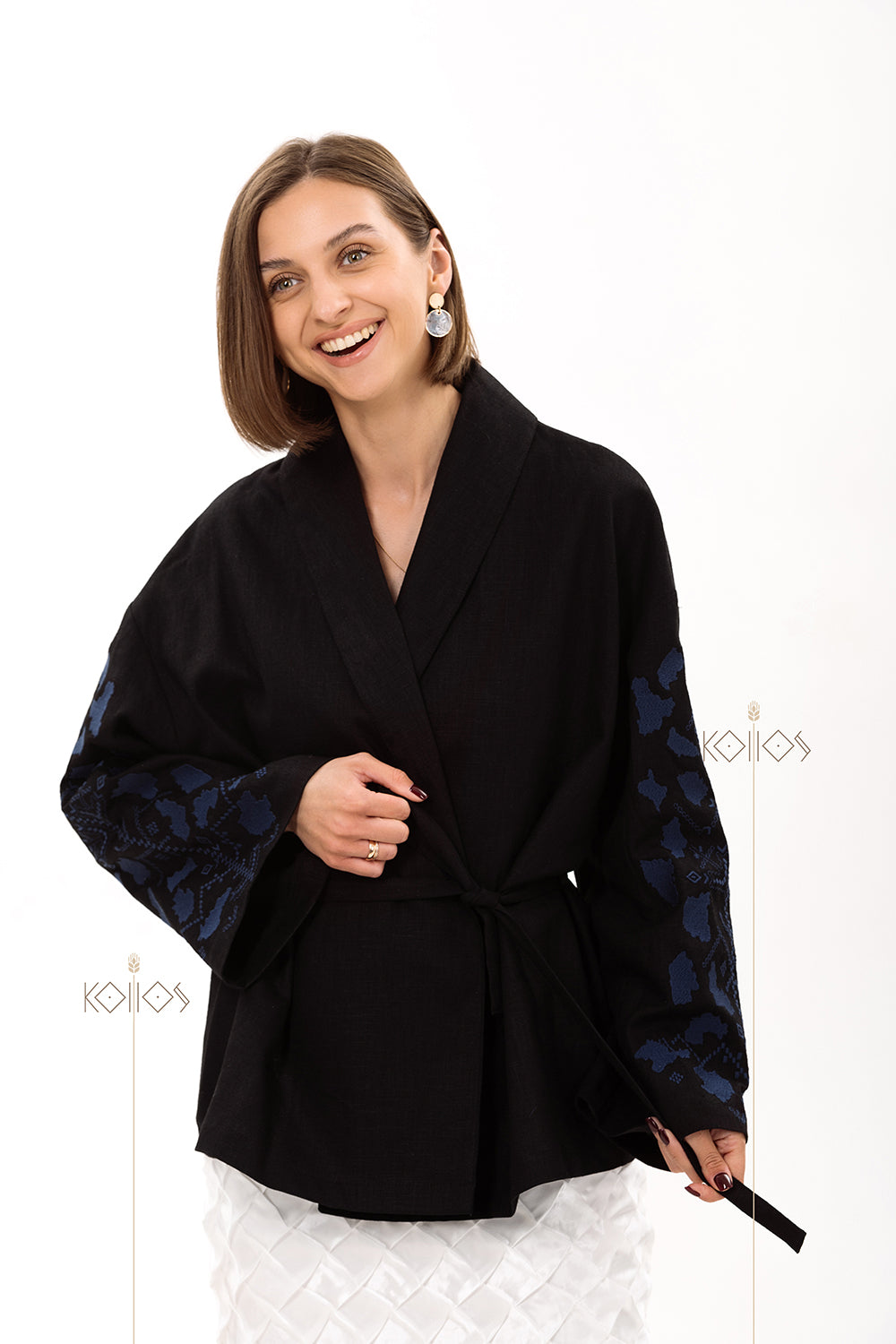
Women's Embroidered Blouses and Shirts
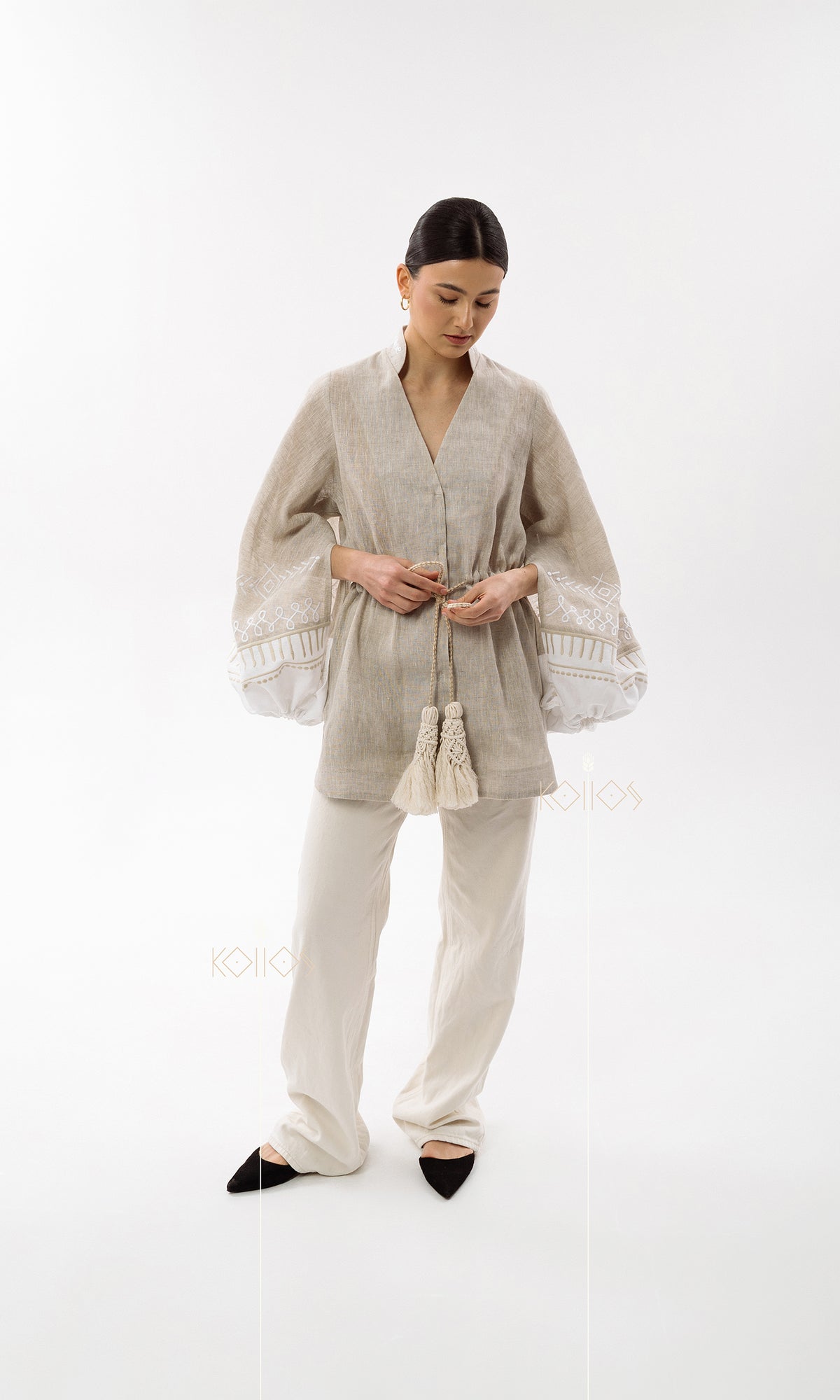
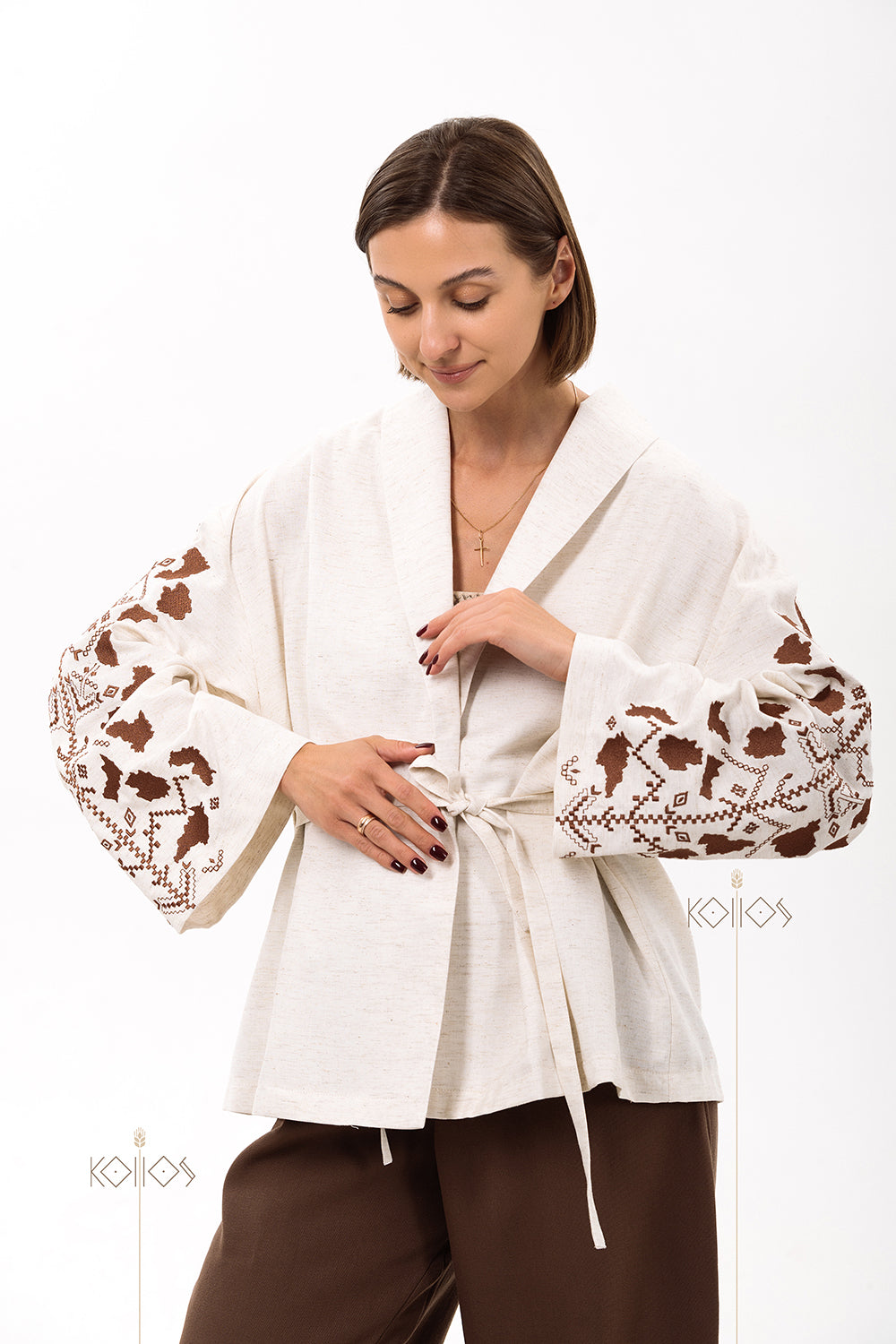
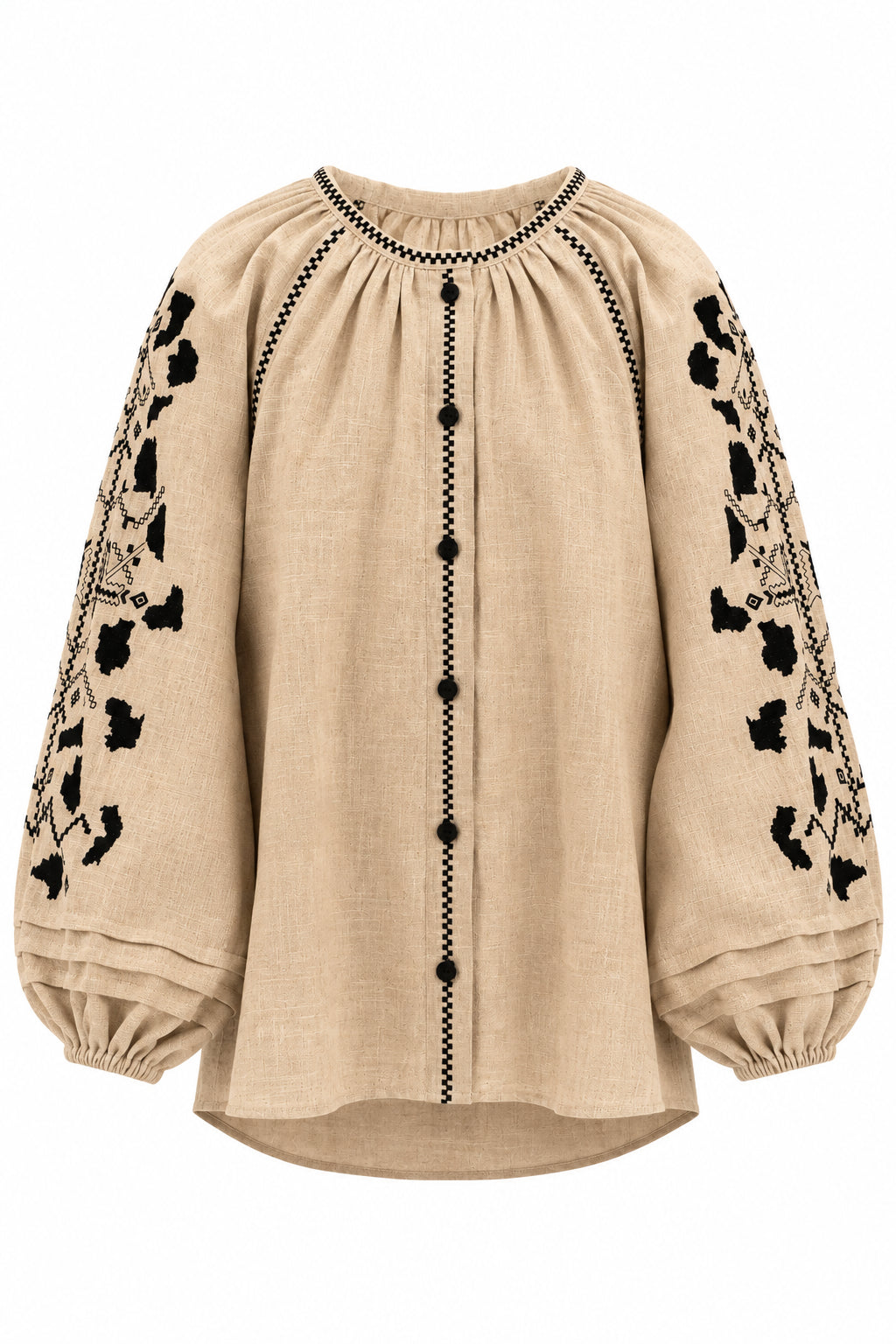
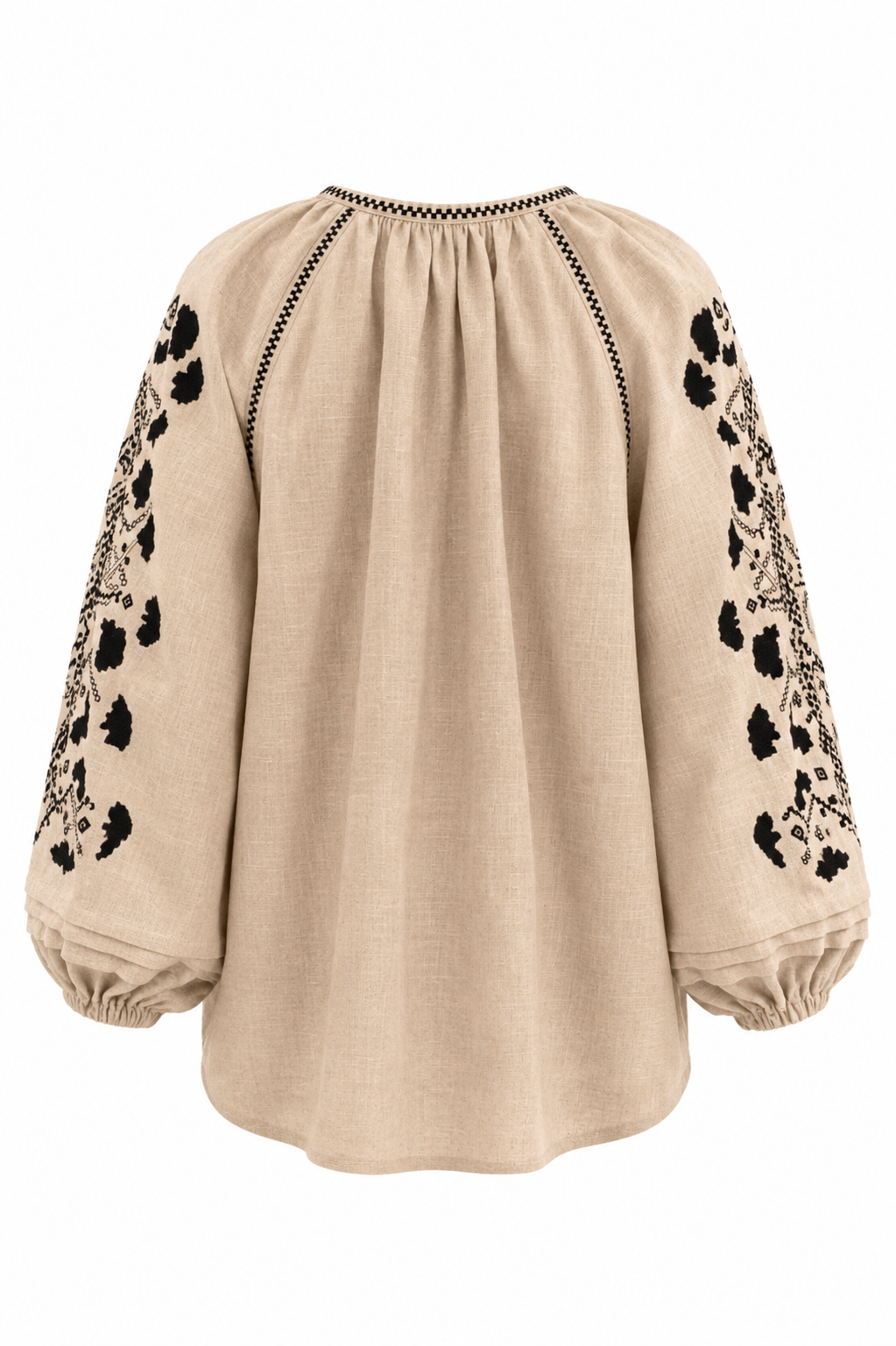
An embroidered blouse is the most versatile item in a Ukrainian wardrobe. It can be worn with jeans, classic trousers, a skirt, under a jacket, or on its own. This section features women's embroidered blouses and shirts made of linen, batiste, and cotton: from models with minimal embroidery on the collar to shirts with fully embroidered sleeves.
How a Blouse Differs from an Embroidered Shirt
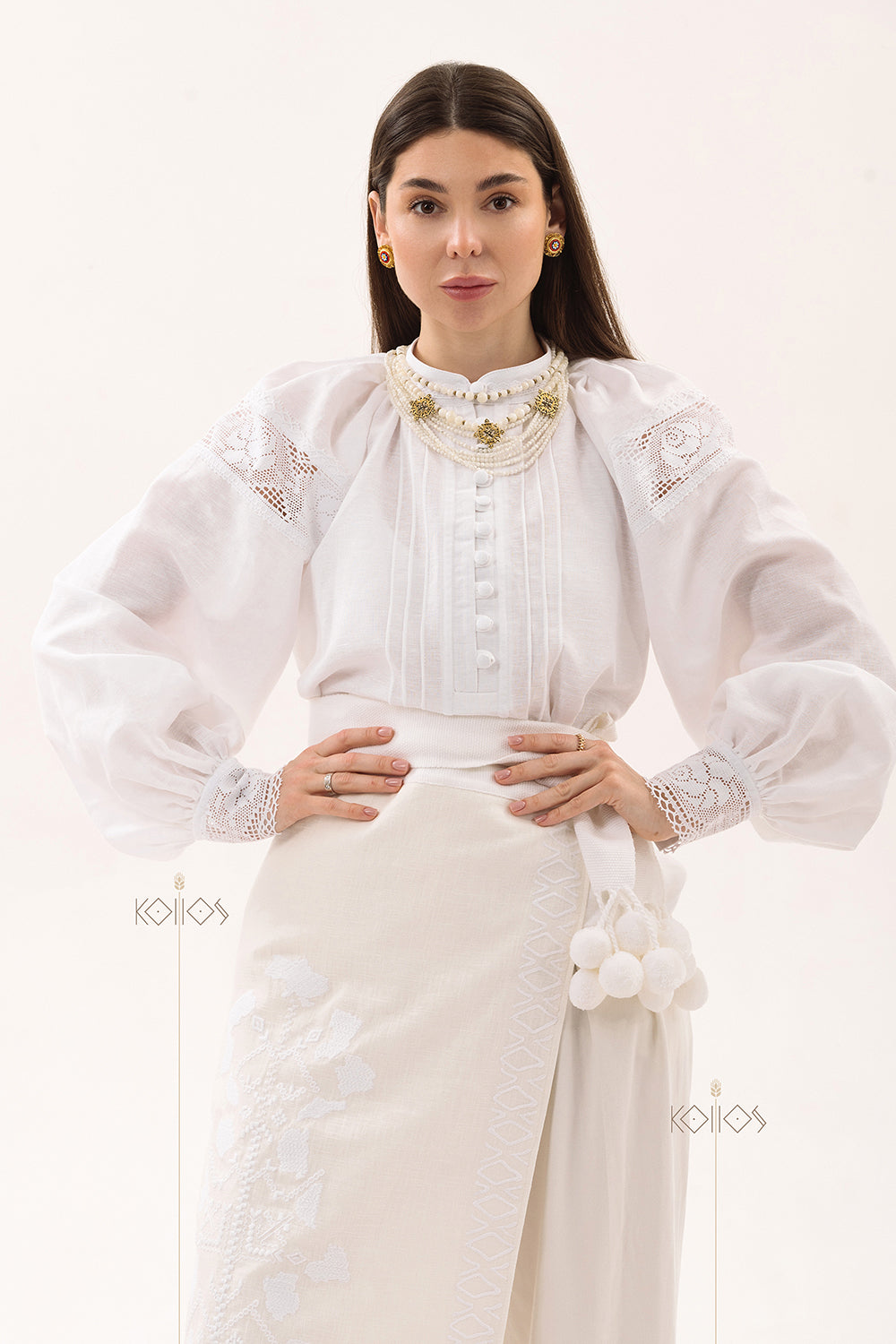
A classic embroidered shirt has a traditional construction: a straight cut, set-in or gathered sleeves, a stand-up collar, and embroidery on the sleeves, shoulders, and cuffs. An embroidered blouse is a more modern interpretation: shorter, made of thinner fabric, often with a V-neck, puff sleeves, or without a collar. Functionally, an embroidered blouse is lighter and easier to combine with an office wardrobe, while a shirt looks more authentic and festive.
Styles and Sleeves
Straight Cut
The most versatile option: non-constricting, suitable for any figure, worn untucked or tucked in.
Fitted Model
With darts or a drawstring at the waist. Creates a clearer silhouette, works well with skirts.
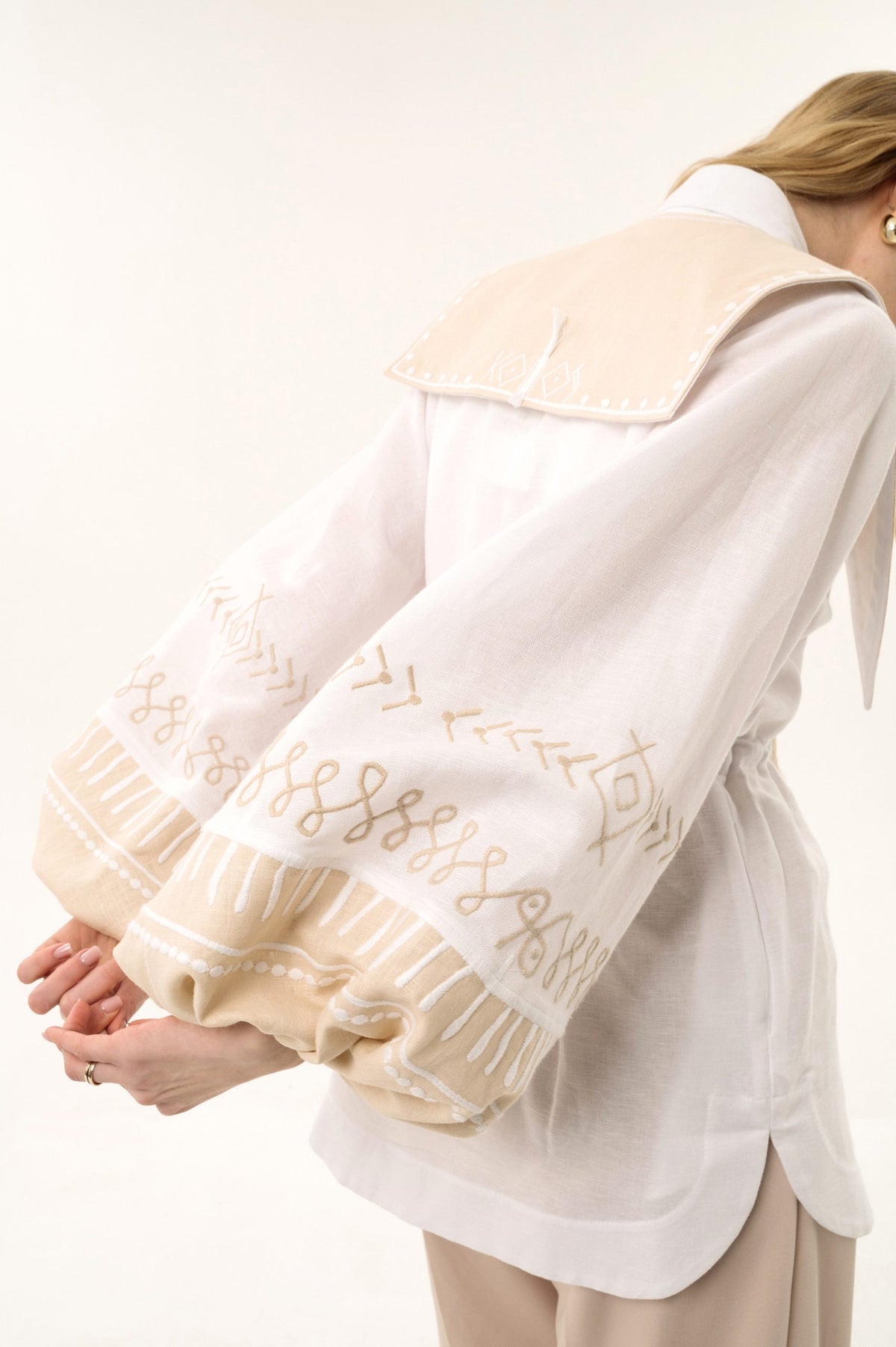
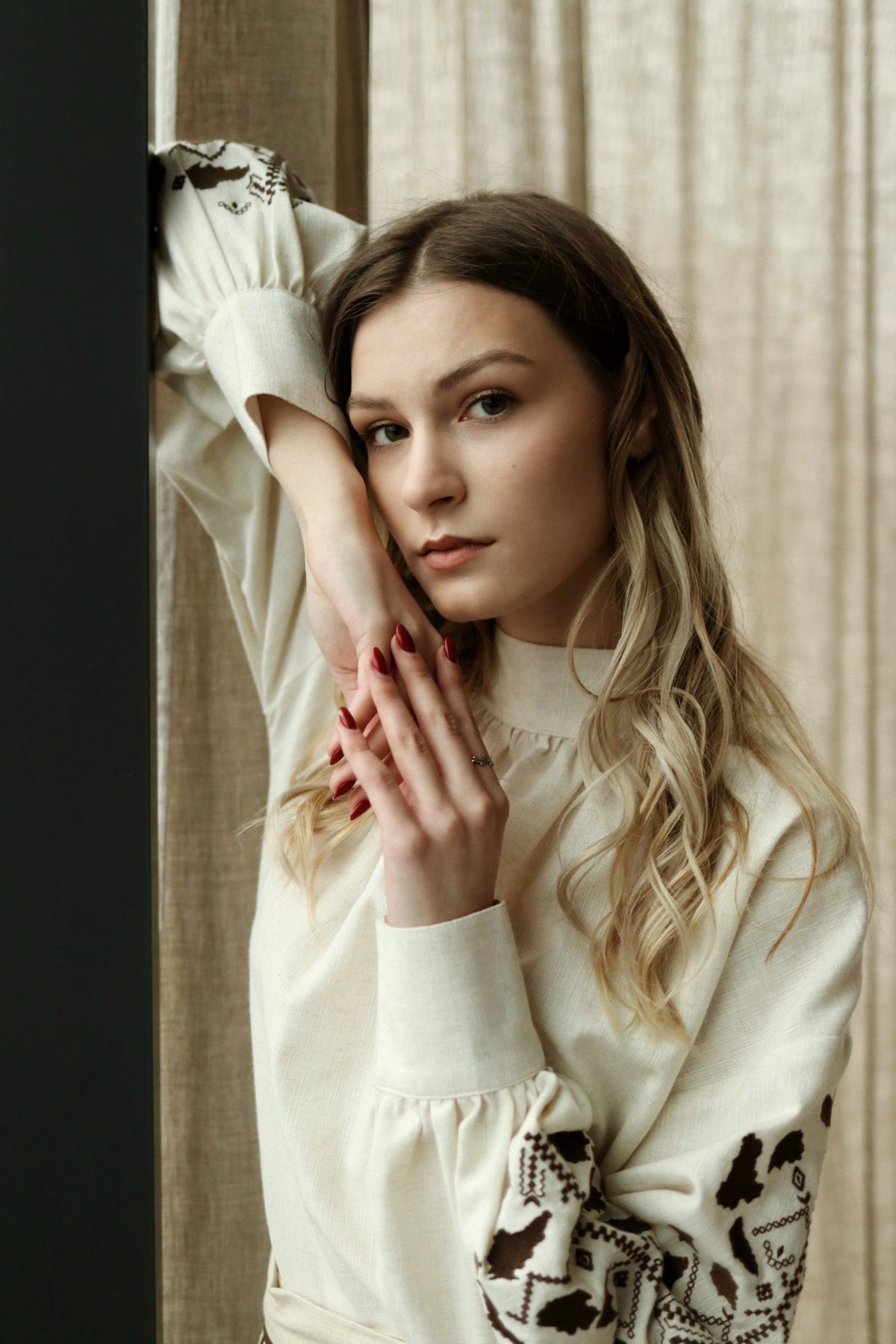
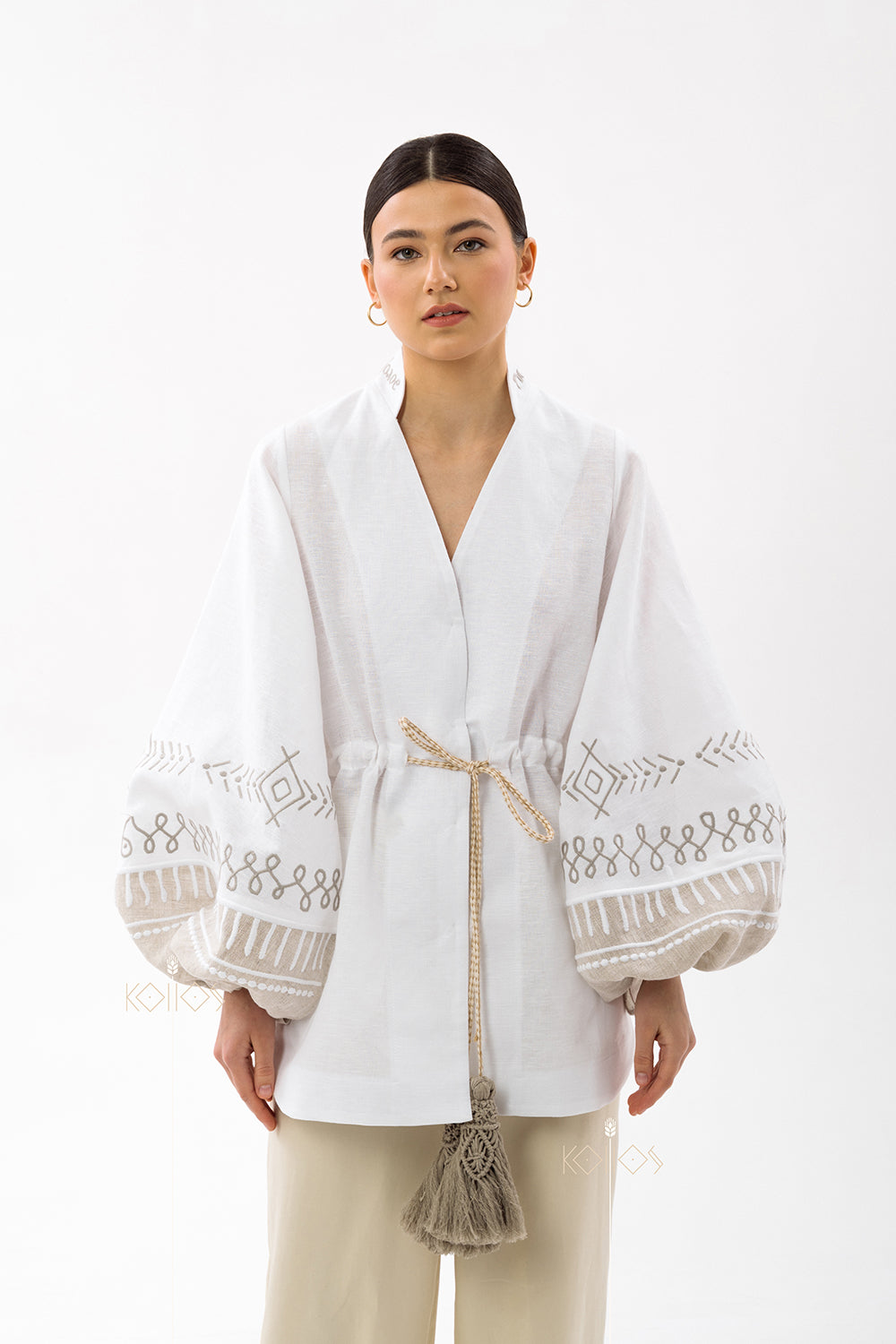
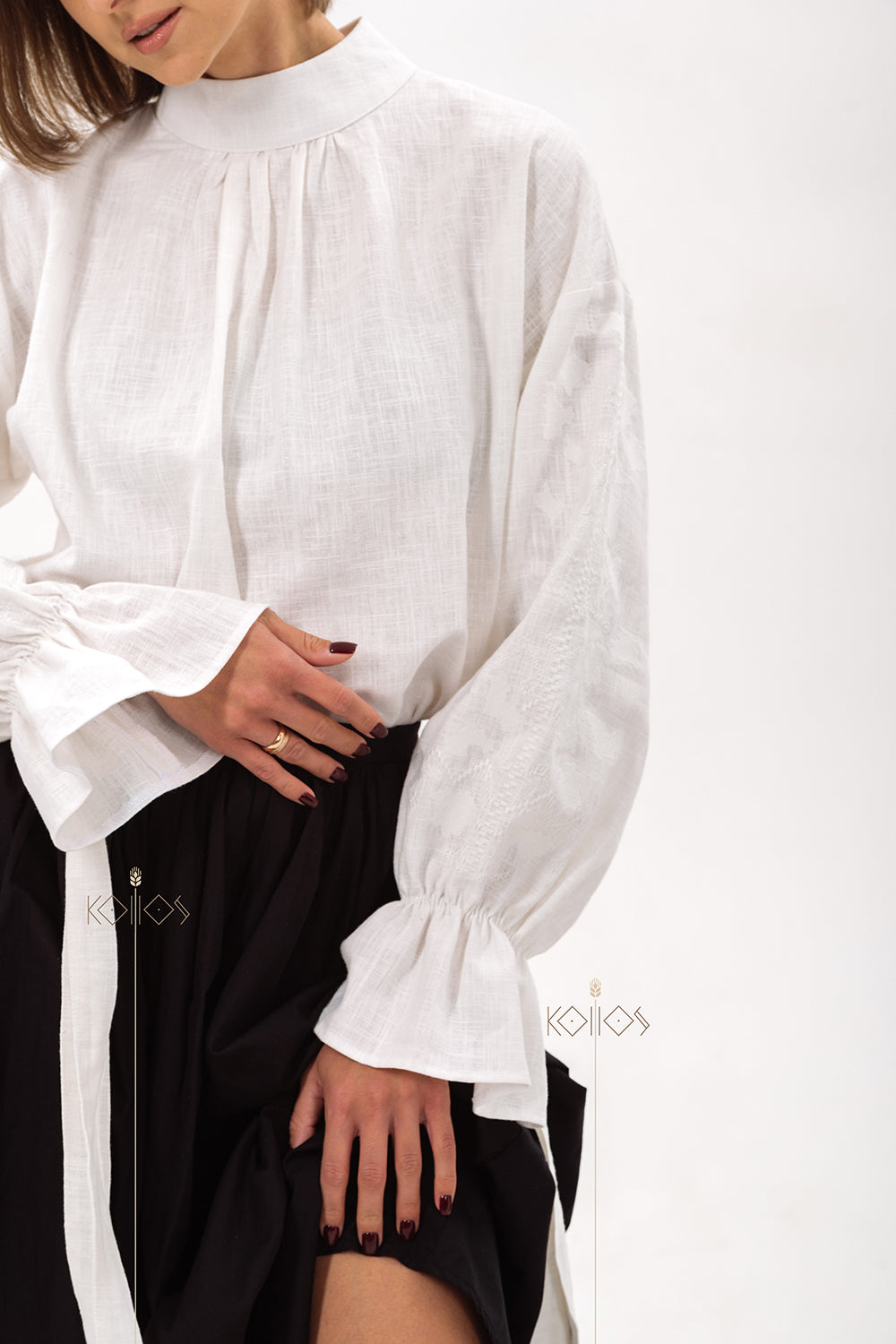
Puff Sleeve and Bishop Sleeve
Voluminous sleeve with gathering at the shoulder or cuff. Visually narrows the waist and adds a festive touch to the look.
Short Sleeve
A summer option where embroidery is usually concentrated on the neckline and shoulders.
Collar: How It Changes the Look
A stand-up collar is the most traditional option, making the look stricter and suitable for the office. A collarless model with a tie-neckline looks lighter and more youthful. A V-neck visually elongates the neck and works well for broad shoulders. A turn-down collar makes the embroidered shirt closer to a regular shirt, so such a blouse most easily fits into a business wardrobe.
Fabrics
Batiste is the thinnest option, almost transparent, ideal for summer and for blouses under a jacket. Thin cotton is softer and more practical to care for. Linen is the strongest and most textured, holds dense embroidery well, but requires ironing. Half-linen is a compromise: it holds its shape and wrinkles less.
Embroidery Techniques on Blouses
Cross-stitch creates a clear geometric pattern and the most recognizable look. Satin stitch looks softer and is suitable for floral motifs. Merezhka (drawn-thread work) and cutwork create openwork areas – on blouses, they are often placed along the sleeve or on the edge of the collar. A combined technique combines a machine base with handmade elements.
How to Choose the Size of a Blouse
The key measurement is the bust circumference; for fitted models, add the waist circumference. For a straight cut, the allowance for a loose fit is already included, so there's no need to "take a size up." Also check the sleeve length: for models with a cuff, the sleeve should end at the wrist; for puff sleeves, a shorter option is acceptable.
If you are between sizes: for a straight cut, take the smaller size; for a fitted model, take the larger size.
What to Wear with an Embroidered Blouse
- Blouse + straight jeans + loafers — a basic everyday look.
- Blouse with a stand-up collar + black classic trousers — office.
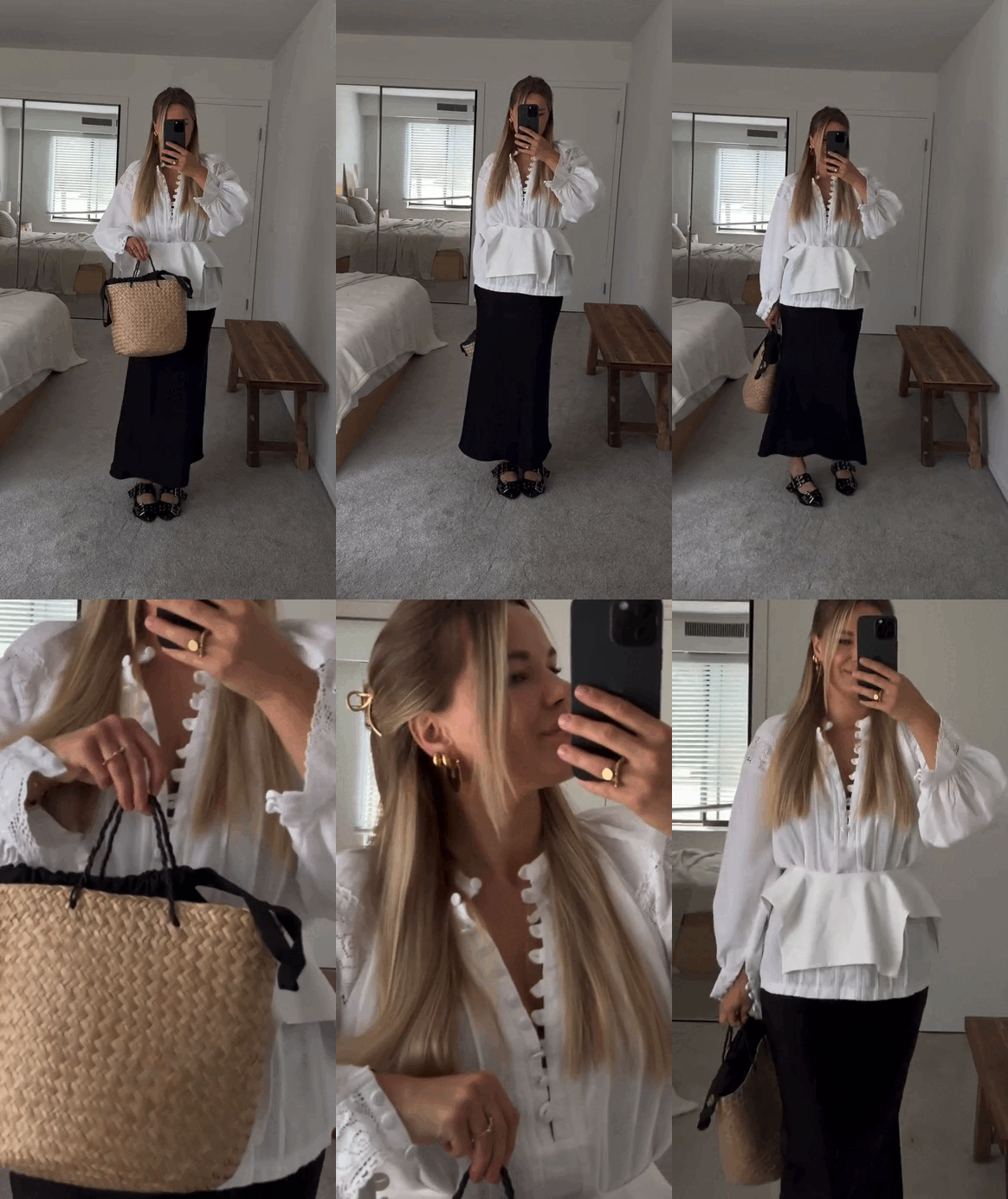
- Blouse + midi skirt + thin belt — a feminine look for going out.
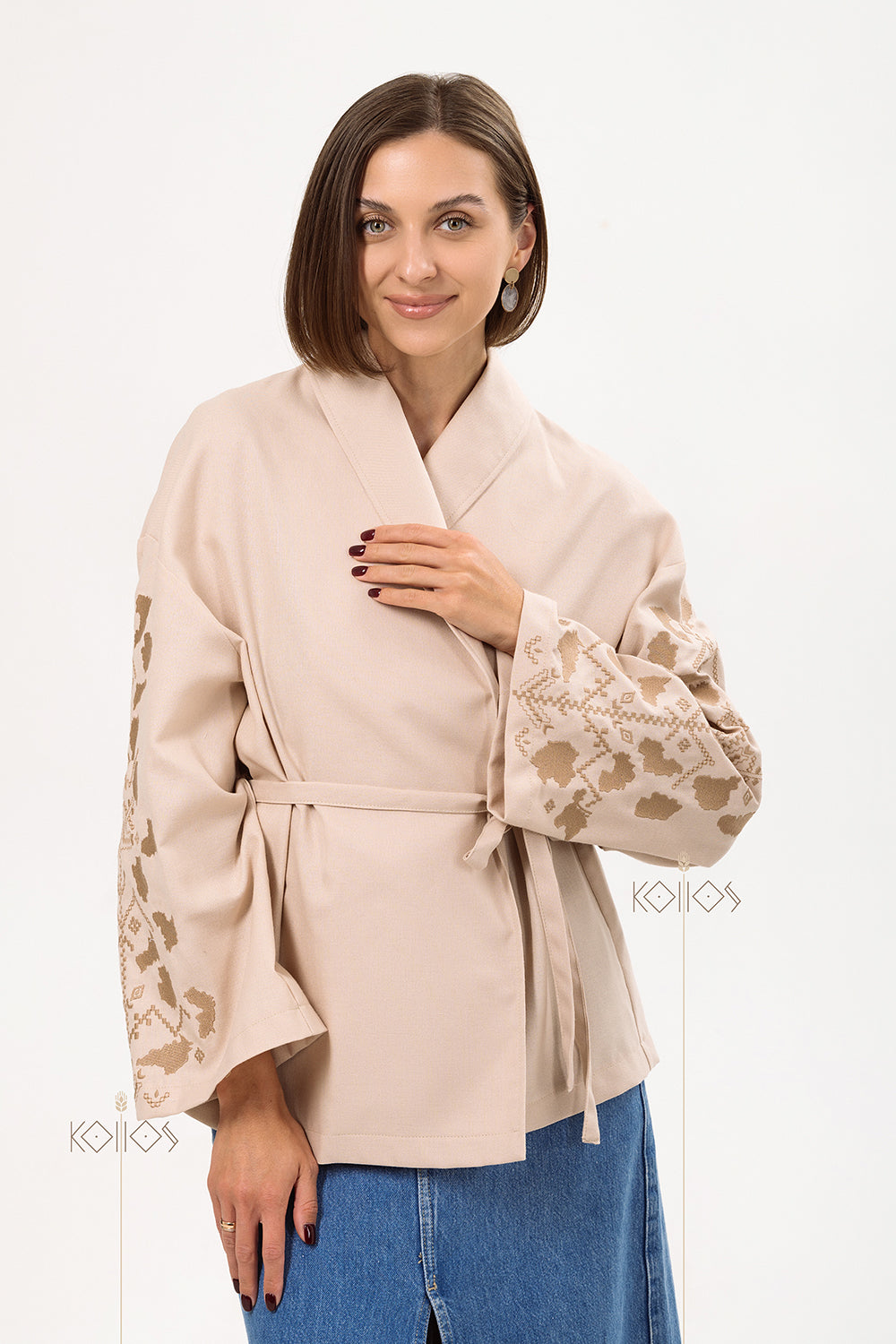
- Blouse + vest or jacket — cool weather.
Follow the rule of one accent: if the blouse has dense embroidery, the rest of the outfit should be monochromatic.
Care
Wash at 30 °C on a delicate cycle, white blouses separately from colored ones. Batiste and thin cotton are best washed in a laundry bag to avoid damaging openwork areas. Dry flat, iron from the inside out through a thin cloth – this will keep the embroidery立体 and prevent the fabric from becoming shiny.
Common Mistakes When Choosing a Blouse
First – choosing a size that is too snug: an embroidered blouse traditionally has a loose fit, and in a tight model, the embroidery on the sleeves stretches and deforms. Second – combining a blouse with a patterned bottom: the embroidery ornament and the print on the skirt or trousers create visual clutter. Third – ironing the embroidery with direct pressure from the iron on the front side: the relief flattens, and the fabric becomes shiny.
Another point is transparency. Batiste blouses almost always require a top or underwear in a matching color; this is not a flaw in the fabric, but its natural property, which should be considered in advance.