Men's Vyshyvankas: Embroidered Shirts
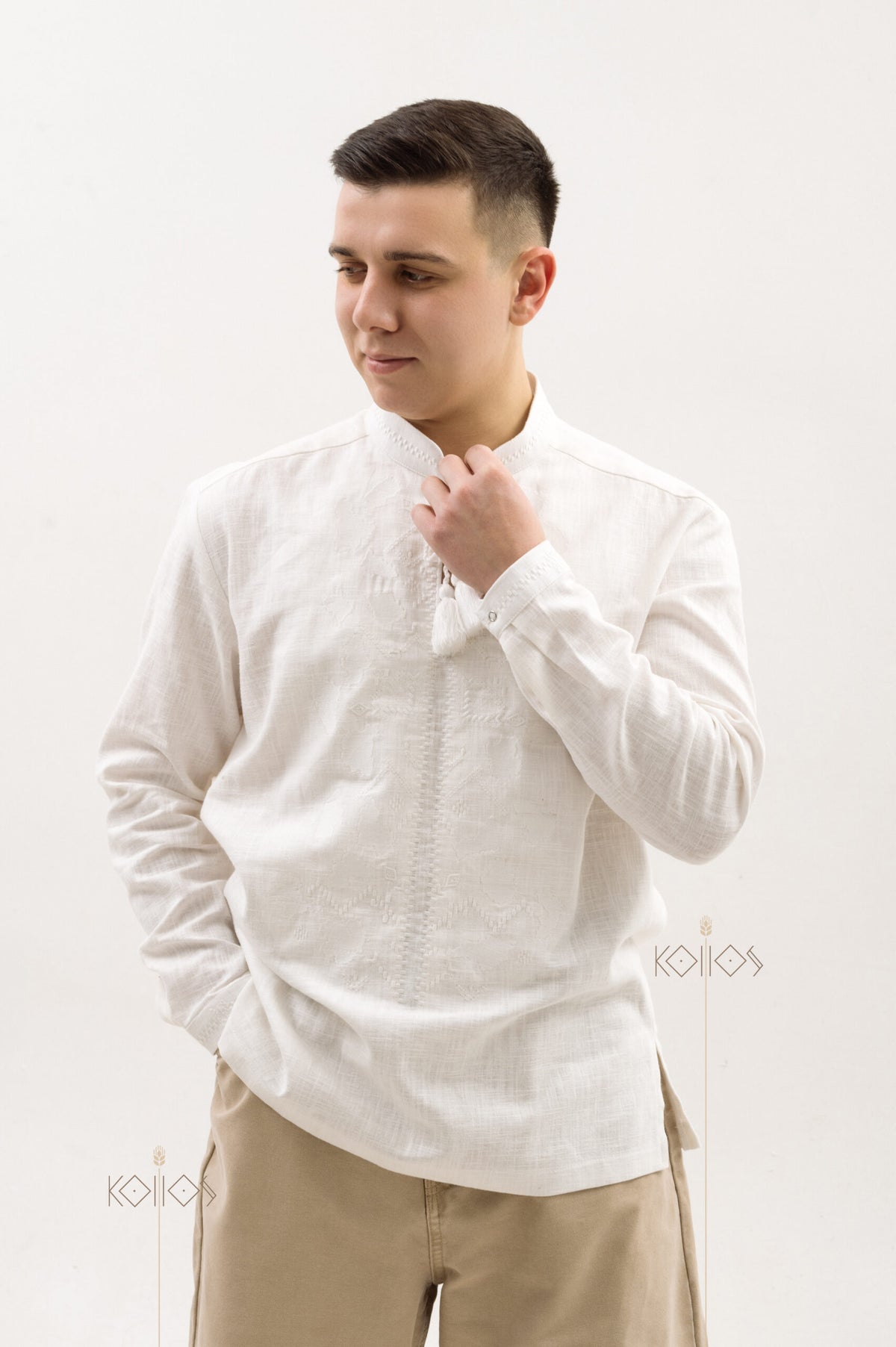
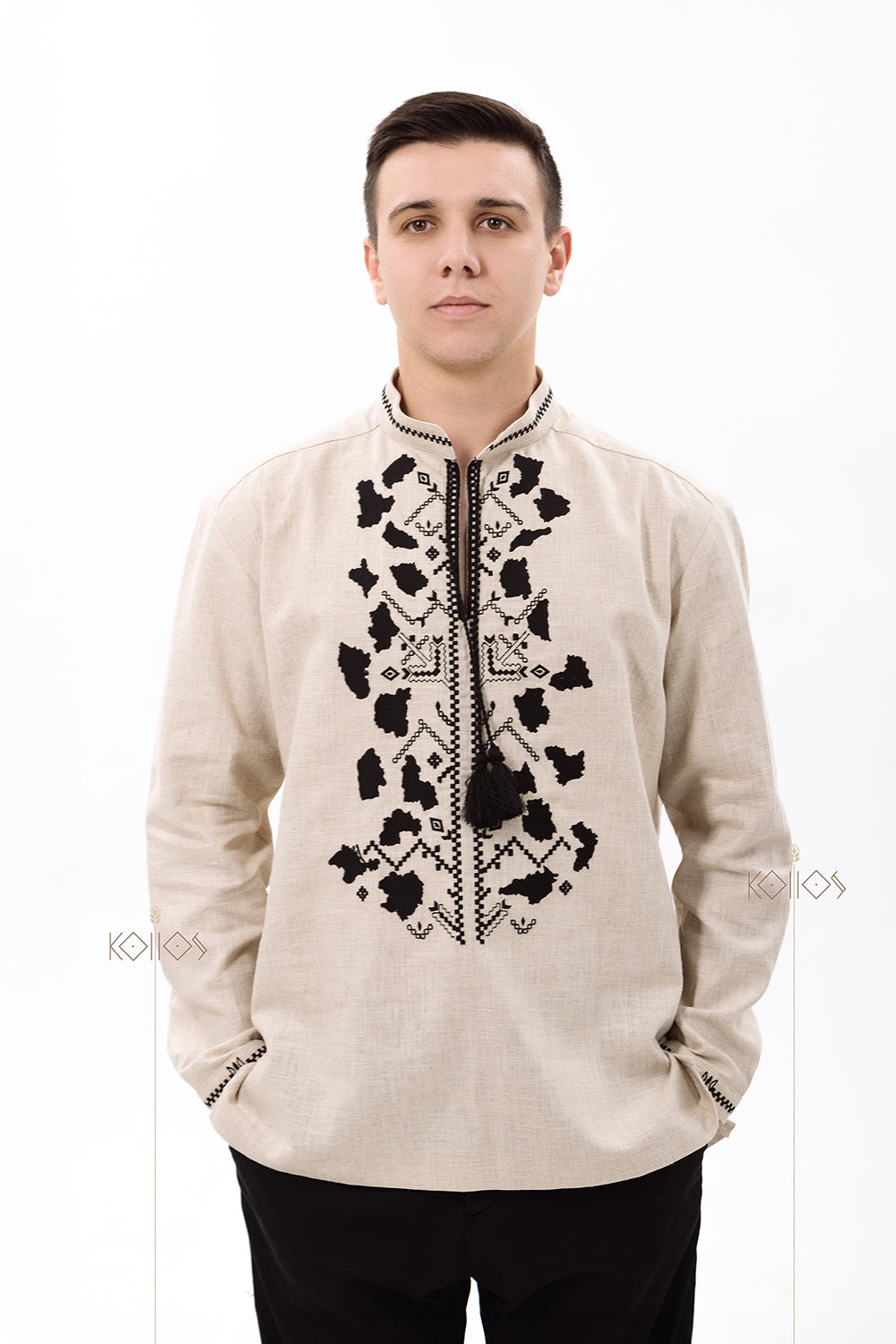
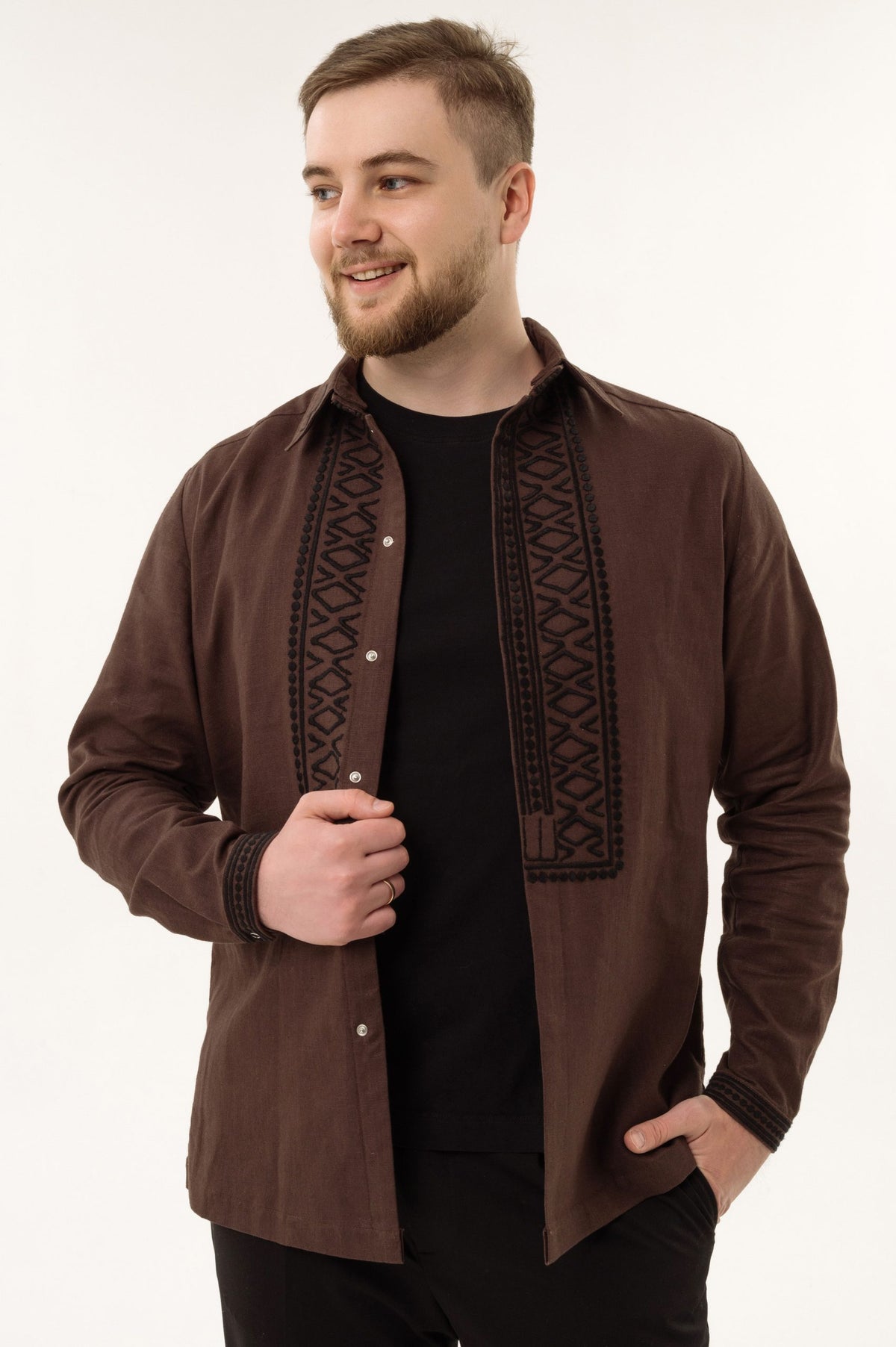
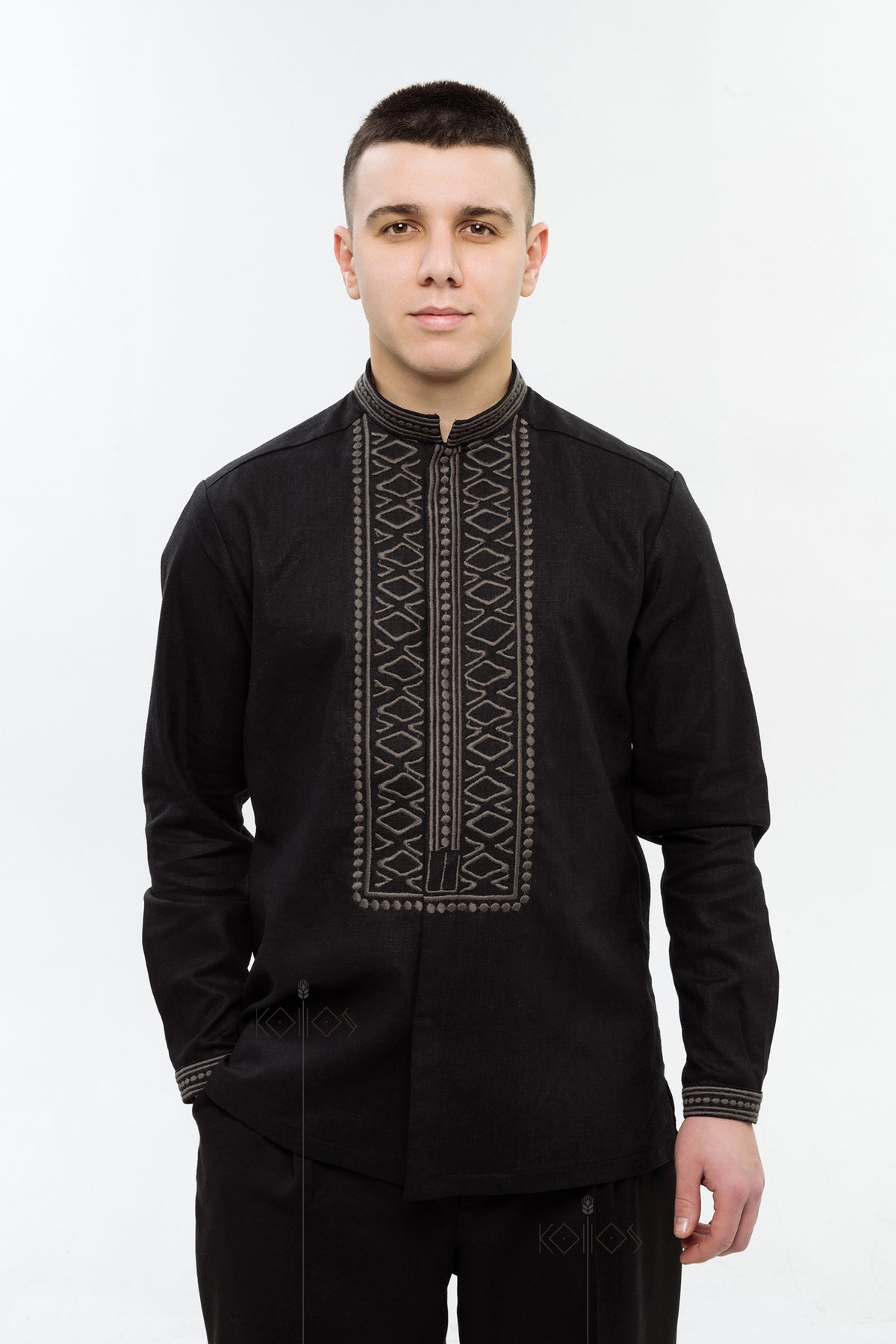
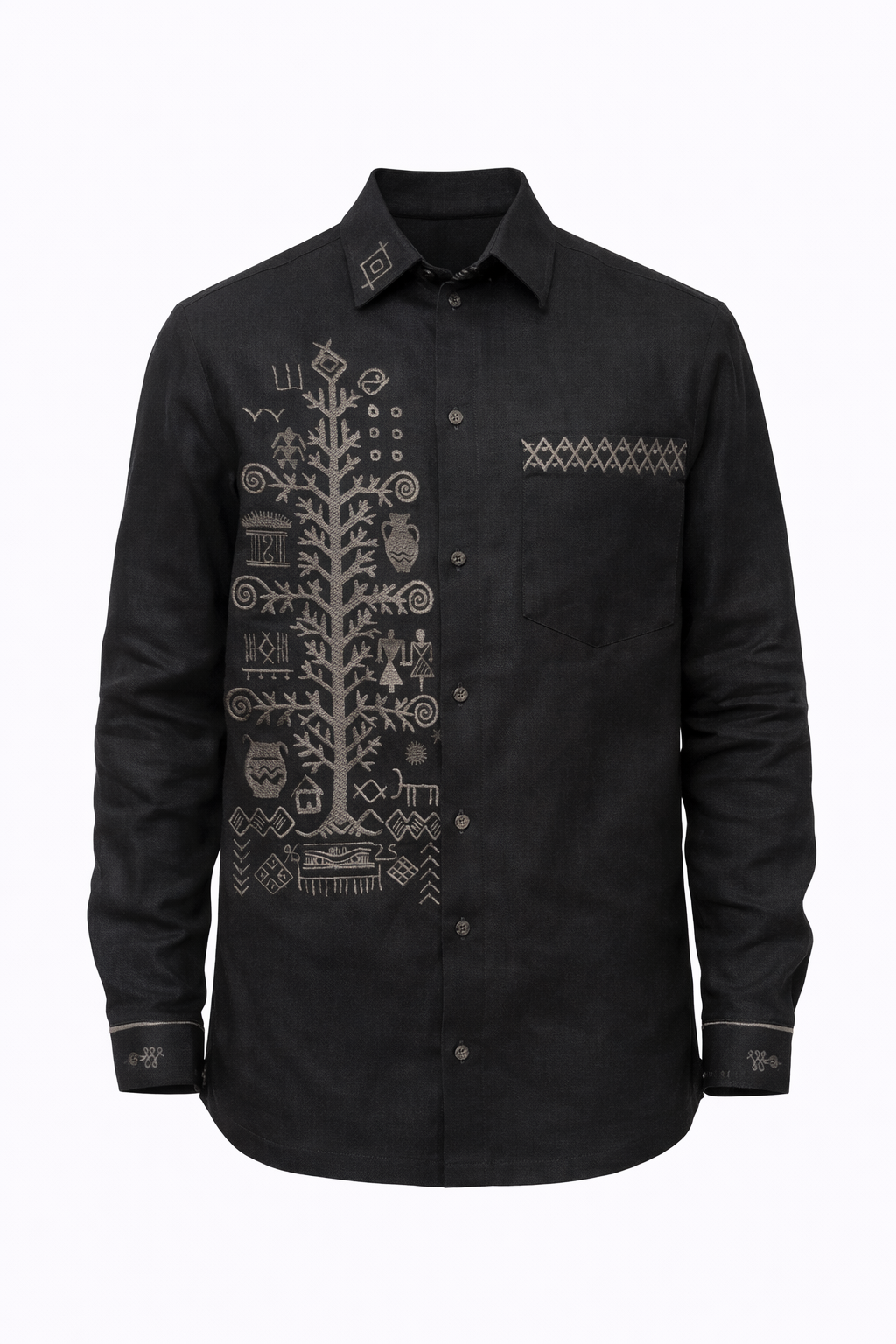
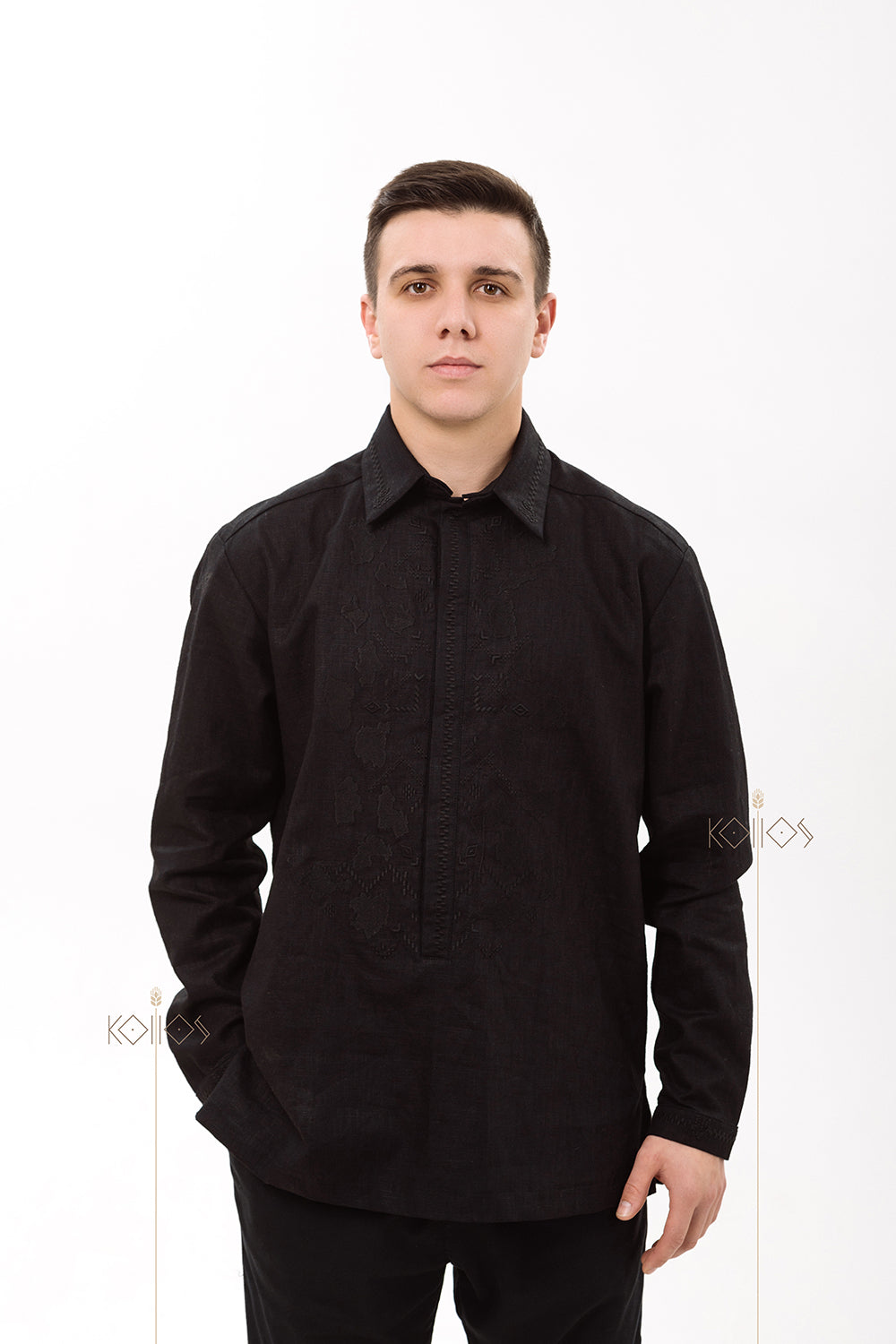
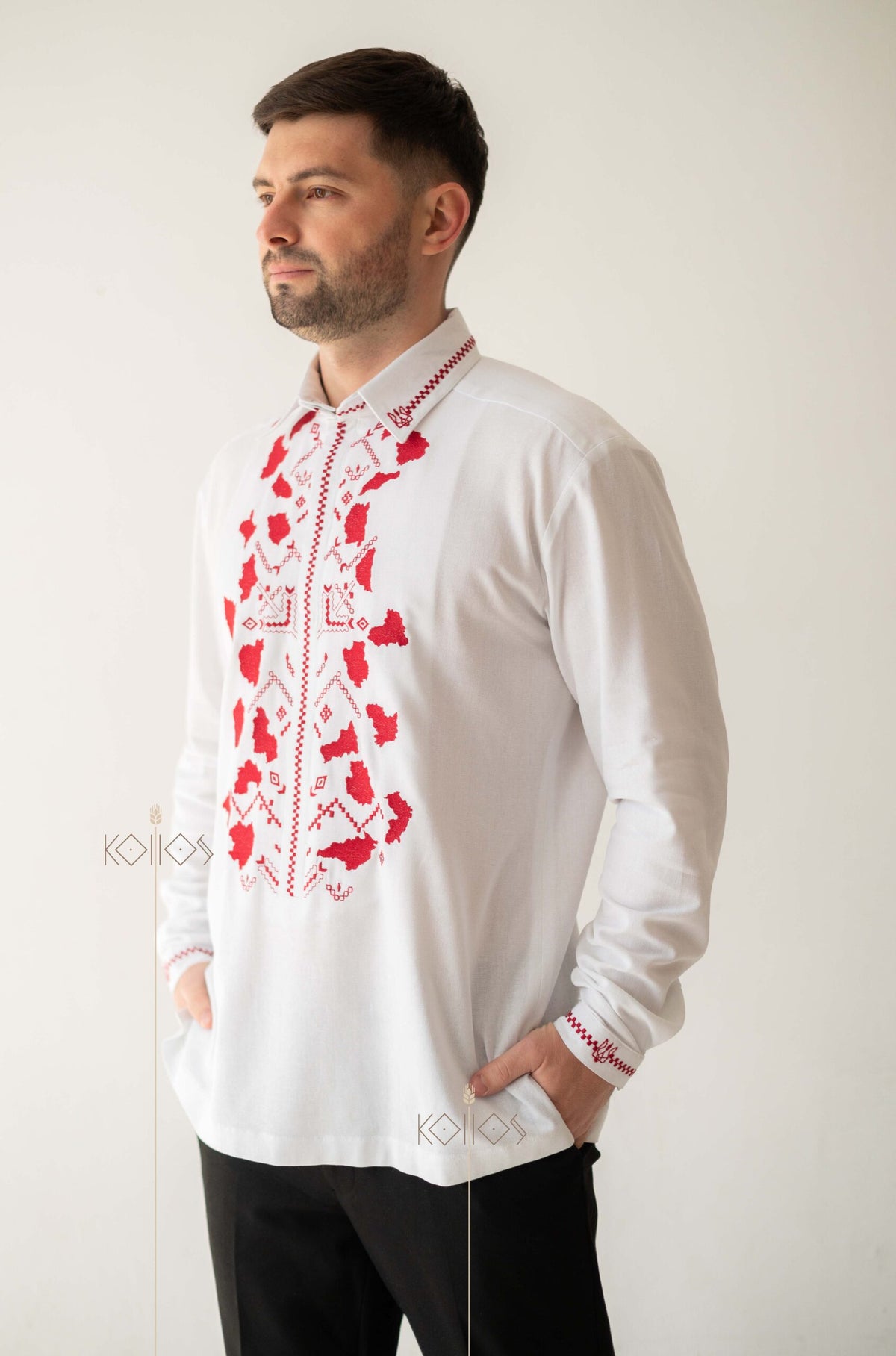
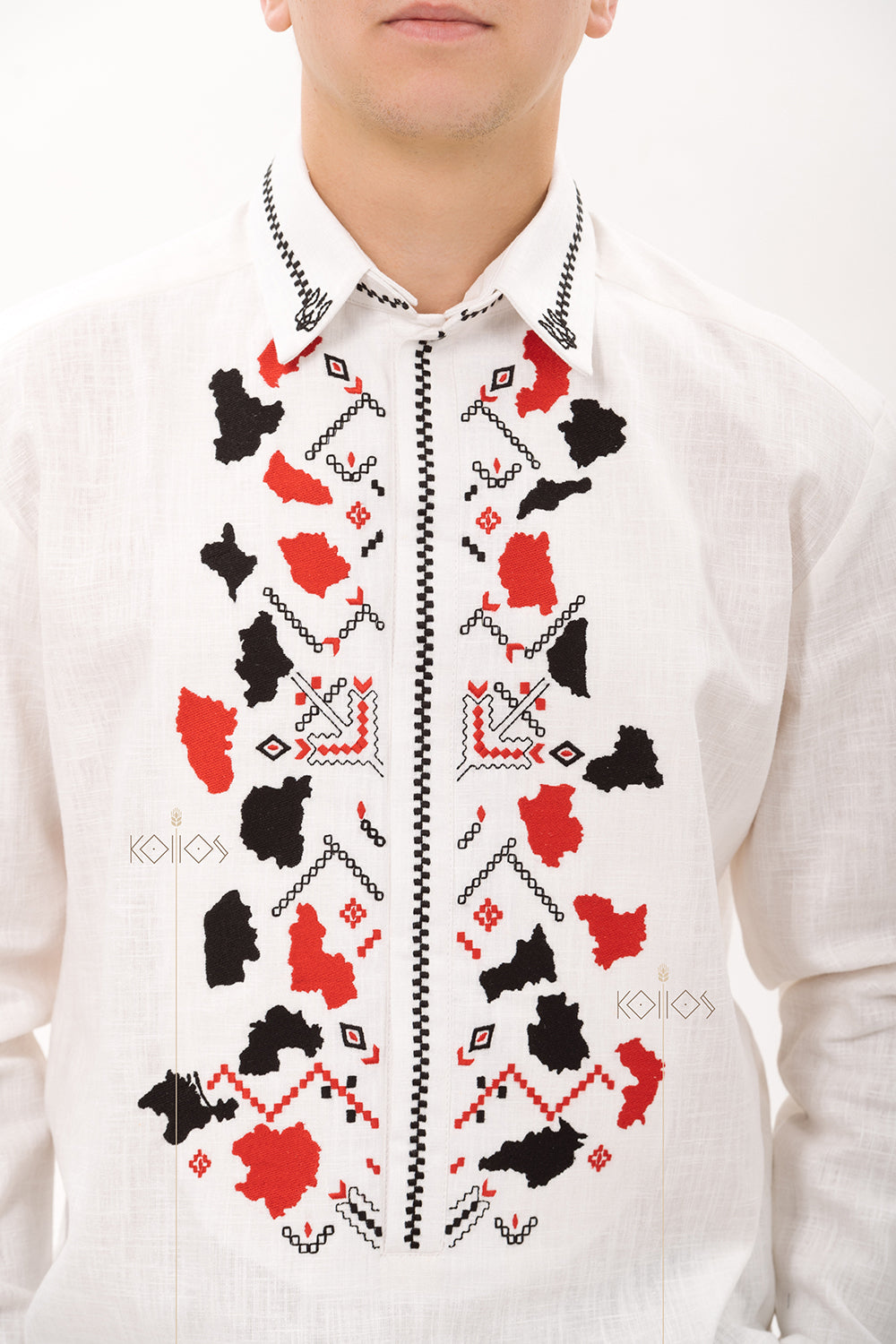
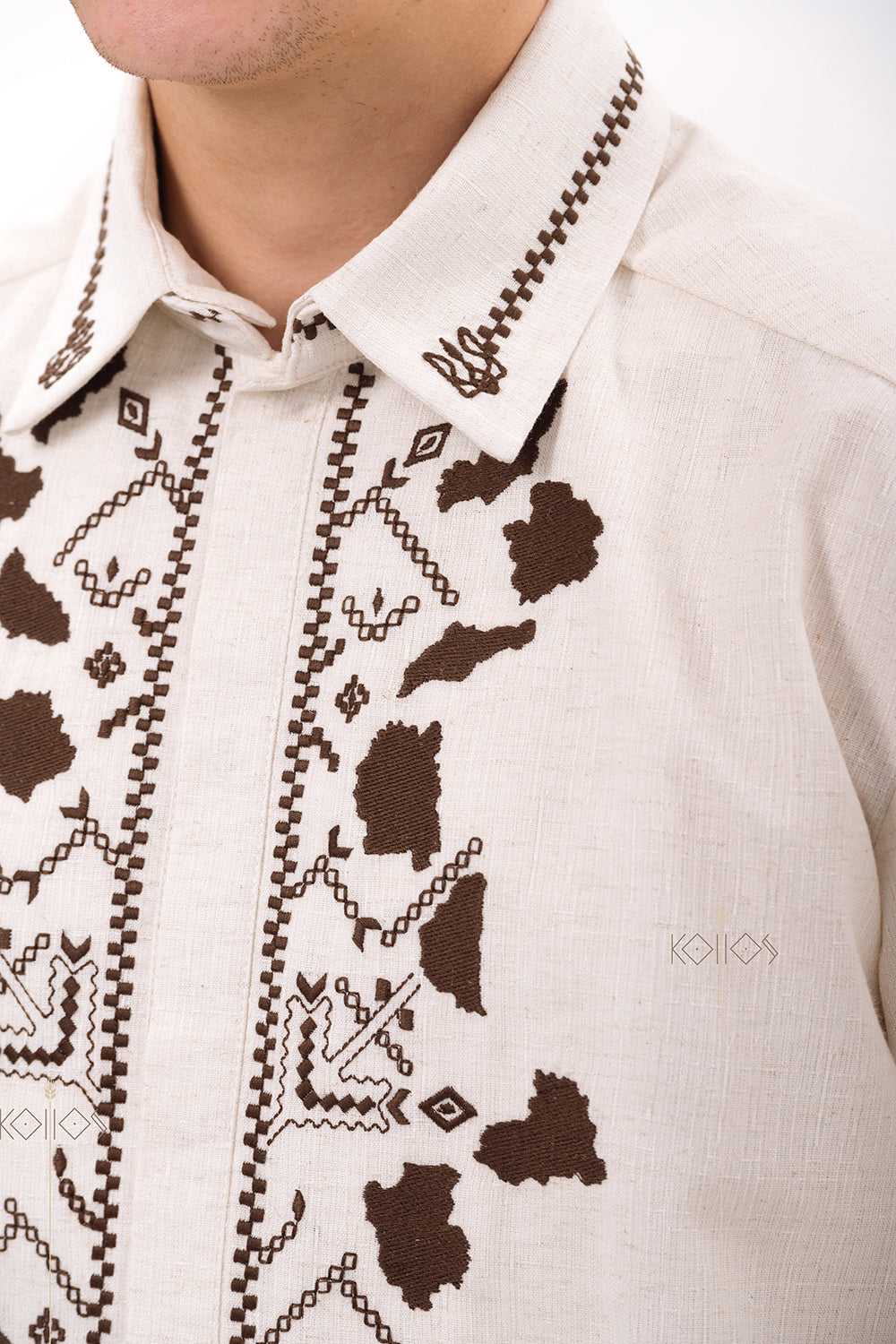
A men's vyshyvanka is a central item in the Ukrainian men's wardrobe. Its straight cut, stand-up collar, and embroidery on the placket and cuffs constitute a design that has remained unchanged for centuries because of its comfort. This section features men's vyshyvanka shirts made from linen, semi-linen, and cotton: with long and short sleeves, with minimal embroidery, and with rich regional ornaments.
How a Traditional Men's Shirt is Constructed
A classic vyshyvanka is sewn from straight pieces without darts: the body, inserted sleeves, a gusset under the armpit, a stand-up collar, and a placket opening at the chest. The gusset is not merely decorative; it is a functional element that provides freedom of movement and prevents the fabric from tearing under the armpit.
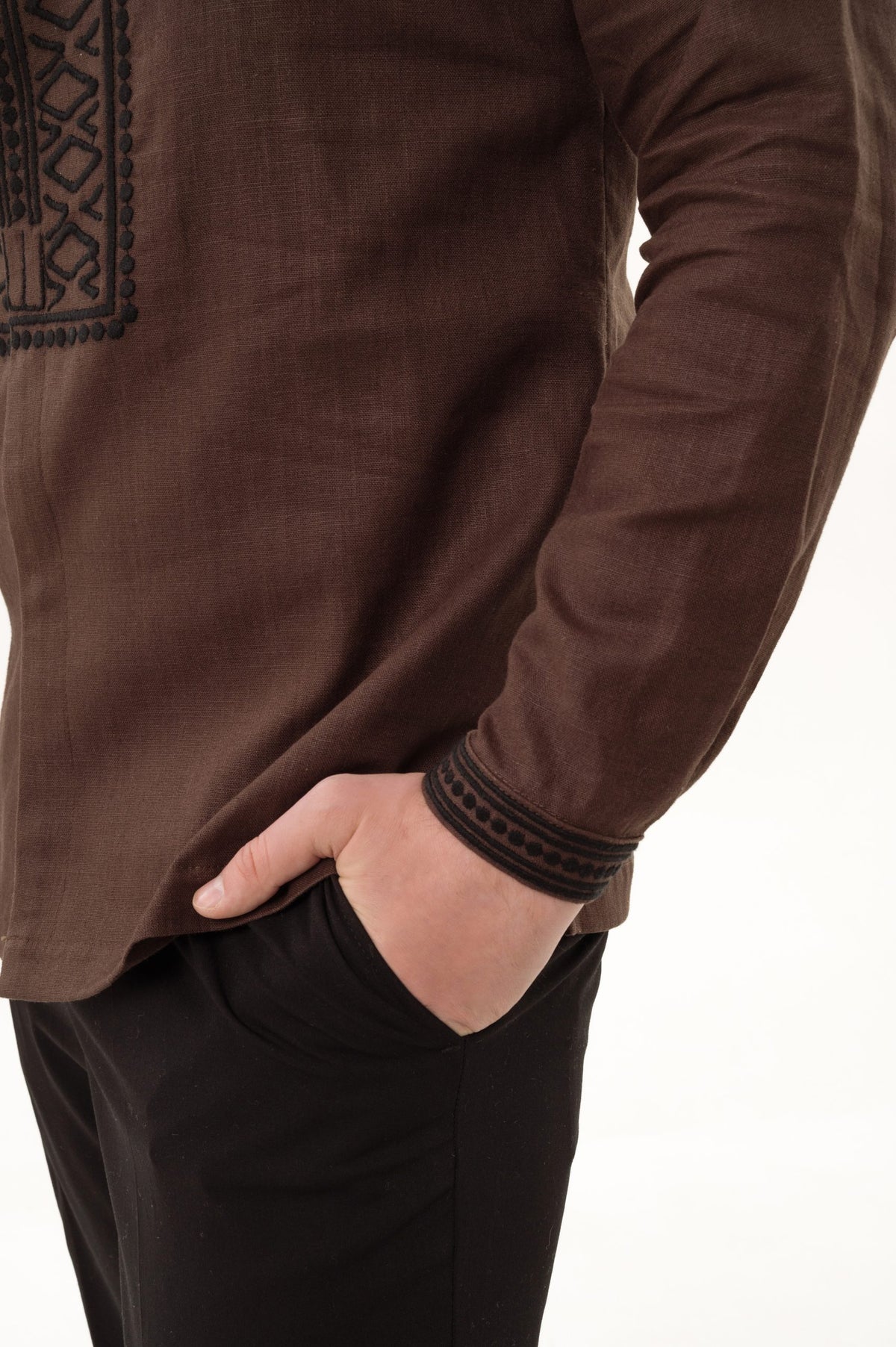
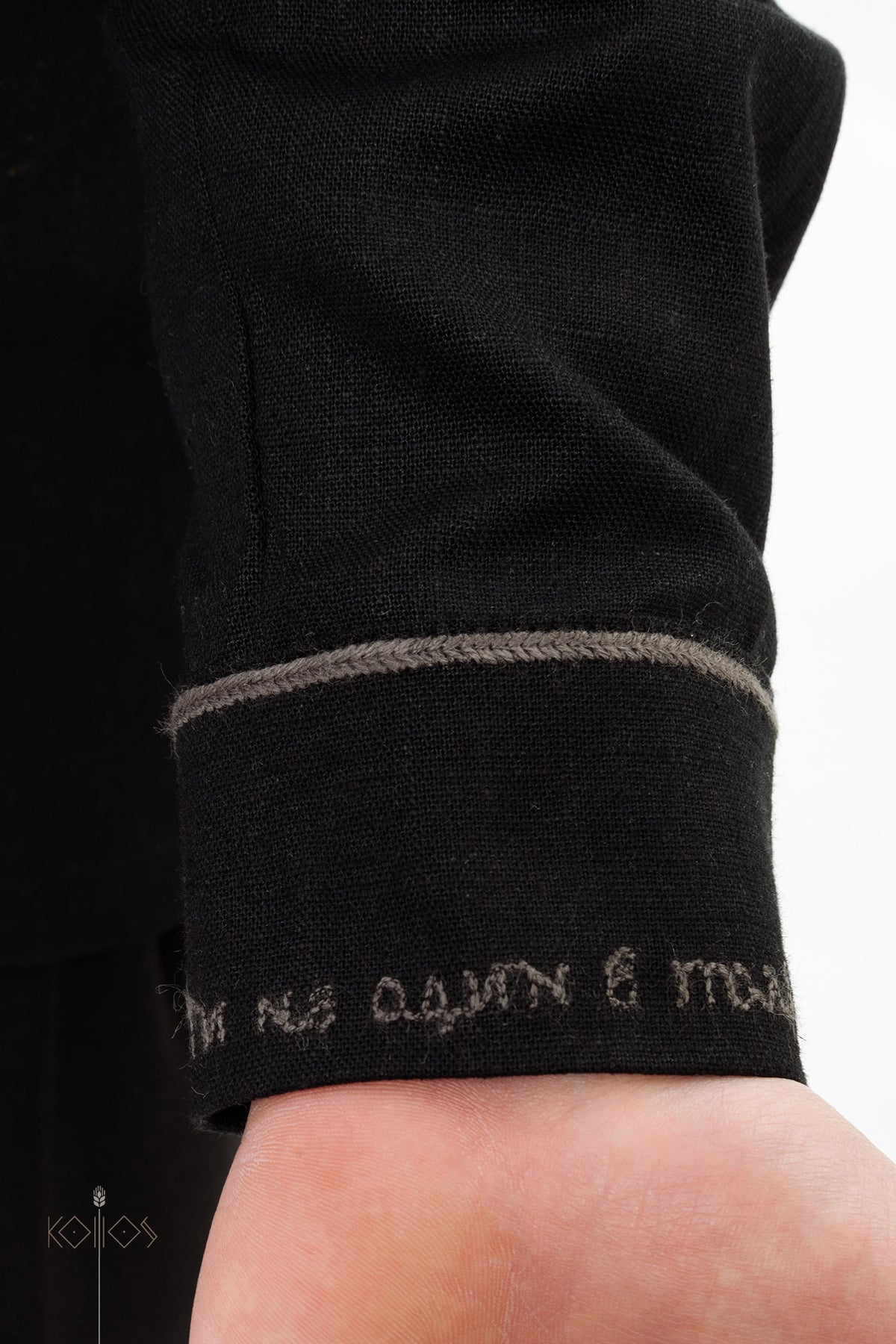
Embroidery is traditionally placed on the collar, placket, cuffs, and sometimes on shoulder inserts and the hem. The logic is simple: the ornament protected the garment's openings—where the fabric was exposed.
Regional Ornaments in Men's Shirts
Naddnipryanshchyna
Red and black embroidery, geometric and floral motifs, moderate ornamental coverage. The most versatile option.
Poltavshchyna
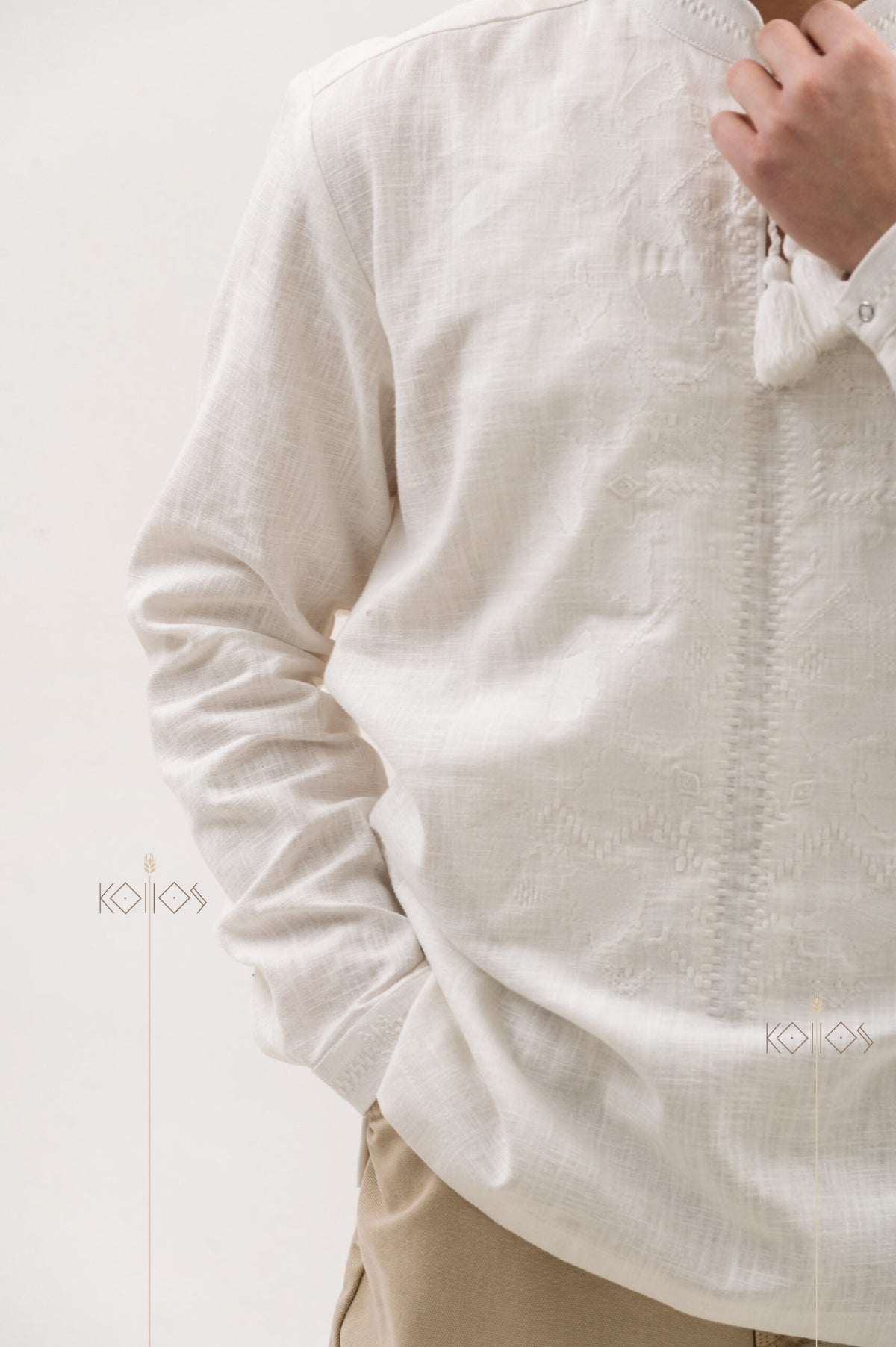
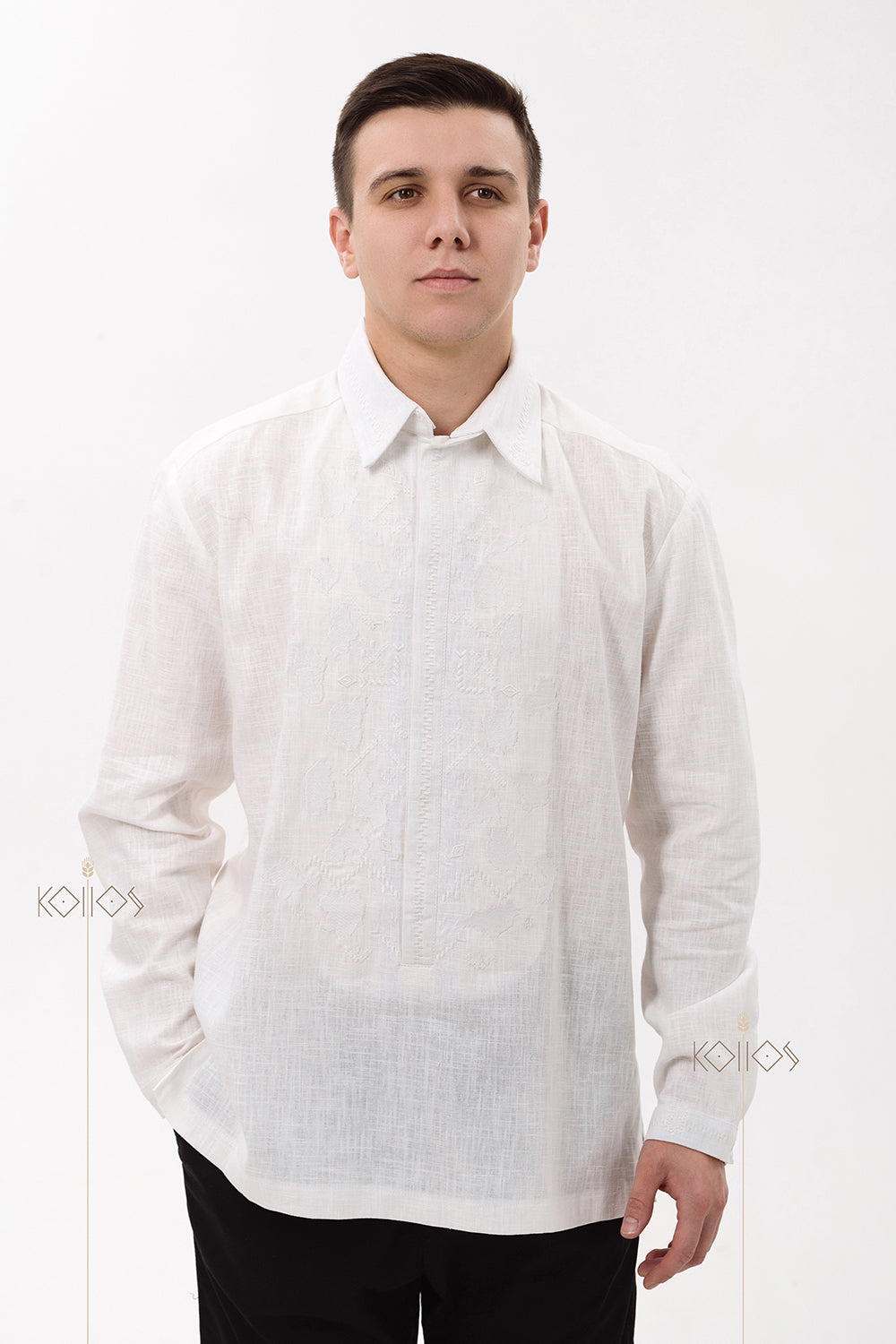
White-on-white, merezhka (drawn-thread work), and cutwork. The most understated type—the shirt looks elegant and requires no additional accents.
Hutsulshchyna
Multi-colored geometry on the chest and cuffs. The most festive and expressive option.
Podillia
Dense embroidery with a predominance of black and red, often with raised nizynka (low-stitch embroidery).
Sleeve and Collar
Long sleeves are a classic, appropriate all year round. Short sleeves are a summer version, with embroidery concentrated on the collar and chest. The stand-up collar is a traditional option that creates a more formal look; the turn-down collar makes the vyshyvanka closer to a regular shirt and fits better into a business wardrobe. Models with ties and no collar are the most authentic but also the least formal.
How to Choose Your Size
Measurements: chest circumference, waist circumference, sleeve length, and garment length. The traditional straight cut allows for a loose fit—the shirt should not pull at the shoulders or when the arm is raised. If your measurements are borderline between two sizes, choose the smaller one: linen shrinks slightly after the first wash.
For tall men, the critical measurement is the body length: the shirt should cover the waistline even during movement. If you plan to tuck it in, you'll need extra length.
Fabrics
Linen is the basic choice: durable, breathable, with a distinctive texture, and holds dense embroidery well. Semi-linen wrinkles less and is softer to the touch. Cotton and batiste are suitable for light summer models. Hand-woven fabric is the most authentic, used in festive shirts, and provides a dense, "living" texture.
How to Style It
- Vyshyvanka + straight dark trousers + leather shoes + belt — a versatile festive outfit.
- Shirt with minimal embroidery + jeans + boots — an everyday option.
- Vyshyvanka under a solid-colored blazer or vest — for official events.
You can wear the shirt untucked (then a belt is needed—either a woven kraika or a leather belt) or tucked in. Avoid athletic footwear with festive models and combining a vyshyvanka with patterned trousers.
Care
Wash at 30 °C on a delicate cycle, without bleach; wash white shirts separately from colored ones. Spin at low revolutions to avoid creasing the embroidery. Dry on a hanger in a straightened position, away from direct sunlight. Iron inside out or through a thin cloth while the shirt is still slightly damp.
It's best to store a vyshyvanka on a hanger in a fabric garment bag: a folded shirt will eventually develop a crease along the dense embroidery line that is difficult to iron out.
How Many Vyshyvankas Do You Need in Your Wardrobe?
The minimum set is two shirts. The first, restrained, in white or light colors with a small area of embroidery, is suitable for the office, business events, and everyday looks. The second, festive, with a rich regional ornament, is for Vyshyvanka Day, family celebrations, and photoshoots.
The third item is usually a vyshyvanka T-shirt—the most practical option for daily wear and travel.
Common Mistakes
The first is buying a shirt without considering the body length: a tucked-in vyshyvanka constantly comes untucked. The second is choosing a "fitted" size: the traditional cut is designed for a loose fit, and in a tight shirt, the embroidery on the shoulders will stretch. The third is ironing dense embroidery from the front side, which permanently flattens the relief.